Table Of Contents
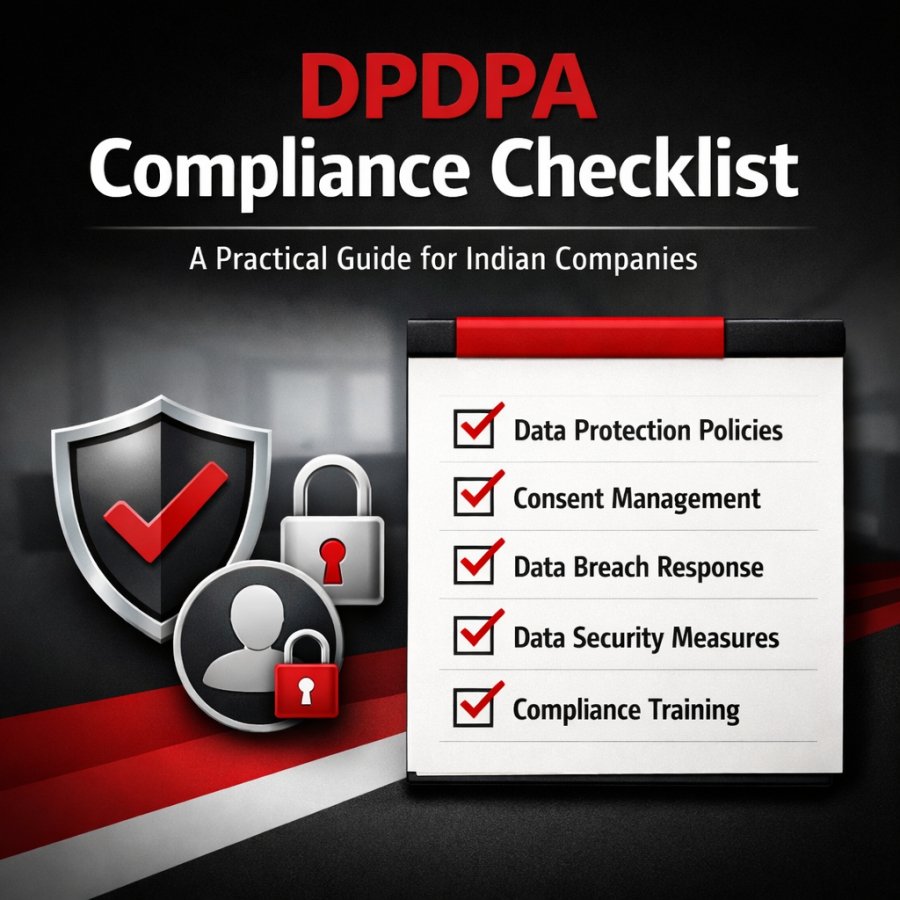
DPDP Compliance Checklist for Indian Companies
What Is DPDP Compliance?
DPDP compliance means aligning your business processes, data handling practices, security controls, notices, consent flows, grievance handling, breach response, and governance mechanisms with the Digital Personal Data Protection Act, 2023 and the DPDP Rules, 2025. The law is built around the processing of digital personal data in a way that balances an individual’s right to protect their data with lawful business use
Why DPDP Compliance Matters Now More Than Ever ?
A single mistake in how data is collected, stored, shared, or processed can lead to penalties, brand damage, and lost customer trust. In today’s market, people do business with companies that protect their data, not companies that treat privacy as an afterthought.
DPDP compliance is not just about avoiding fines. It shows your customers, partners, and stakeholders that you take privacy seriously, handle data responsibly, and run your business with maturity.
In simple terms:
DPDP compliance helps you build trust, reduce risk, and stay ready for the future.
DPDP Compliance Checklist for Indian Companies
1. Identify What Personal Data You Collect
Start with a data inventory. List every category of personal data you collect across:
- website forms
- CRM
- HRMS
- mobile apps
- cloud storage
- partner and vendor portals
If you do not know what personal data you hold, your DPDP implementation is already broken.
2. Map Why You Collect It
For each data set, identify:
- why it is collected
- where it comes from
- who uses it
- where it is stored
- who it is shared with
- how long it is retained
- how it is deleted
This is where most companies fail. They collect first and justify later. That is bad compliance and even worse governance.
3. Review Your Privacy Notice and Consent Flows
Your privacy notice should not be generic website wallpaper. It should actually explain:
- what data is collected
- for what purpose
- how it is processed
- what rights people have
- how they can contact you
- how grievance redressal works
Where consent is relied upon, the notice and mechanism should be clear, specific, and understandable. The official Rules emphasise this directly.
4. Build a Data Principal Rights Handling Process
Create an internal workflow for:
- access requests
- correction requests
- update requests
- erasure requests where applicable
- nomination handling
- grievance escalation
Do not leave this to ad hoc email threads. Define ownership, turnaround time, evidence logging, and closure criteria.
5. Strengthen Security Controls Around Personal Data
This is where cybersecurity and privacy finally meet reality. Your DPDP compliance posture is weak if personal data is sitting in:
- unmanaged endpoints
- open cloud buckets
- shared drives with weak access control
- unencrypted exports
- unrestricted third-party apps
- outdated VPN or MFA settings
- insecure backup environments
Security safeguards are a central principle of the framework, and the penalty structure makes clear that weak security can become your most expensive mistake.
6. Review Third Parties and Processors
Every vendor that processes personal data for you is part of your risk surface. Review:
- cloud providers
- payroll vendors
- CRM systems
- support tools
- email marketing platforms
- HR vendors
- outsourced agencies
- analytics tools
- document storage services
Ask hard questions. What data do they receive? Where is it stored? What security controls exist? How is deletion handled? What happens during a breach?
7. Define Retention and Deletion Logic
Many companies are terrible at data lifecycle management. They keep everything forever because deleting data requires effort. That is lazy and risky. The framework is built around storage limitation and responsible data handling. Retaining unnecessary personal data increases both regulatory exposure and breach impact.
8. Prepare a Personal Data Breach Response Process
Your incident response process should include:
- detection and validation
- incident classification
- impact analysis
- containment
- internal escalation
- legal and privacy review
- notification decisioning
- evidence preservation
- corrective action tracking
If a breach happens and your team starts arguing over who owns what, you are already losing.
9. Assign Internal Ownership
Someone must own DPDP compliance internally. That may be a privacy lead, compliance owner, legal lead, security leader, or a cross-functional committee depending on business size. The Rules also state that contact information for queries relating to personal data should be clearly displayed, and in some cases this may be a designated officer or Data Protection Officer.
10. Assess Whether You Could Be a Significant Data Fiduciary
The official explainer states that Significant Data Fiduciaries face stronger obligations, including independent audits and impact assessments. If your organisation processes data at scale or in sensitive contexts, do not assume you can operate with a lightweight compliance model forever
Common DPDP Compliance Mistakes Companies Make
Most companies do not fail because the law is impossible. They fail because their internal discipline is weak.
The common mistakes are predictable:
- treating DPDP as only a legal problem
- copying a privacy policy from another website
- collecting more data than needed
- having no data inventory
- having no deletion mechanism
- ignoring vendor risk
- lacking breach response workflows
- not mapping rights-handling responsibilities
- assuming SMBs are irrelevant to regulators
- waiting for a client or incident to force action
How to Start DPDP Compliance the Smart Way
The right approach is not to begin with legal drafting alone. Start with a DPDP readiness assessment across people, process, technology, data flows, and third-party dependencies.
A practical rollout usually looks like this:
- data discovery and inventory
- applicability and gap assessment
- consent and notice review
- security safeguards review
- rights and grievance workflow design
- third-party risk review
- retention and deletion policy design
- breach response alignment
- documentation and evidence creation
- ongoing monitoring and improvement
That is what real DPDP readiness looks like. Not a PDF policy sitting on a website footer.
Final Thoughts
DPDP compliance is not just about avoiding penalties. It is about proving that your company can handle personal data responsibly, securely, and transparently in a digital-first market.
If your company collects, stores, shares, or processes digital personal data in India, now is the time to stop guessing and start building a real compliance program.
CTA: Find Your Risk in Just 10 Minutes with digiALERT
Not sure where your company stands on DPDP compliance?
Book your 10-minute DPDP risk check with digiALERT and see where your real exposure is - BOOK NOW